Yungblud: I opened my chest up and put my heart on a plate
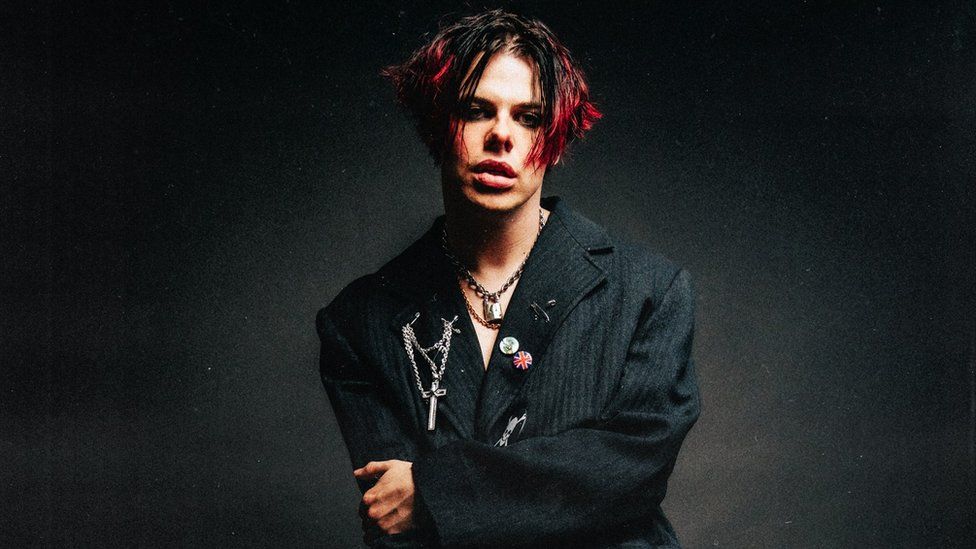
Fourteen days prior, Yungblud caused problems at Japan's Summer Sonic celebration.
"I'm exceptionally stressed over the following entertainer," a compére told the crowd in Osaka, minutes before the vocalist made that big appearance.
"According to anything that he, you should not mosh or yell."
After five minutes... mayhem.
Yungblud says he was uninformed that Japanese crowds will generally be more limited, with moving disapproved of and commendation saved for the rest of the show.
"I just went in front of an audience and shouted, 'Come on, bounce!'" he reviews. "What's more, it's so amusing, they'd been so limited the entire day, it was like they were released. They were a jug of Coke and I dropped two Mentos in - Bang!
"It was delightful however I caused problems. Everybody gave me this objecting gaze, similar to, 'What in the world was that?' And I was like, 'How did I respond? Was I singing level?' No one had let me know the guidelines!"
Outside the scene, it was an alternate story.
"The youngsters were very much like, 'Thank you, thank you, thank you kindly.' Because everybody expected to deliver, everybody expected to feel opportunity.
"Furthermore, that is what's going on with it with Yungblud. It's about opportunity."
This grandiose proclamation is commonplace of the artist musician conceived Dominic Harrison.
To his psyche, Yungblud is definitely not a simply stage name, it's a development. Throughout three collections and many live shows, he's assembled a clan of similar loners who answer his accounts of distance, misery and insubordination with practically strict intensity.
He doesn't call them fans. As a matter of fact he loathes the thought, proclaiming, "On the off chance that I at any point become a demigod, the entire situation is defective". All things being equal, it's a cooperative relationship. As they found comfort in his music, he discovered a feeling of having a place in their family relationship.
"I felt so lost and desolate as a youngster," he says. "Strolling down the road I felt alone, regardless of whether I was encircled by 10 mates. Furthermore, through this music, I got to find a local area that would safeguard me."
"I open my chest up, I put my heart on a plate and I realize individuals will take care of it. Regardless of whether the other world spits on it or tracks on it, somebody will get it and sew me back together."Two weeks prior, Yungblud caused problems at Japan's Summer Sonic celebration.
"I'm exceptionally stressed over the following entertainer," a compére told the crowd in Osaka, minutes before the vocalist made that big appearance.
"According to anything that he, you should not mosh or yell."
After five minutes... mayhem.
Yungblud says he was uninformed that Japanese crowds will generally be more limited, with moving disapproved of and commendation saved for the rest of the show.
"I just went in front of an audience and shouted, 'Come on, bounce!'" he reviews. "What's more, it's so amusing, they'd been so limited the entire day, it was like they were released. They were a jug of Coke and I dropped two Mentos in - Bang!
"It was delightful yet I caused problems. Everybody gave me this disliking gaze, similar to, 'What on earth was that?' And I was like, 'How did I respond? Was I singing level?' No one had let me know the guidelines!"
Outside the setting, it was an alternate story.
"The youngsters were very much like, 'Thank you, thank you, many thanks.' Because everybody expected to deliver, everybody expected to feel opportunity.
"Furthermore, that is what's going on with it with Yungblud. It's about opportunity."
This grand declaration is regular of the artist musician conceived Dominic Harrison.
To his psyche, Yungblud is certainly not a simply stage name, it's a development. Throughout the span of three collections and many live shows, he's accumulated a clan of similar mavericks who answer his accounts of estrangement, melancholy and resistance with practically strict enthusiasm.
He doesn't call them fans. As a matter of fact he detests the thought, proclaiming, "In the event that I at any point become a demigod, the situation is defective". All things considered, it's a cooperative relationship. As they found comfort in his music, he discovered a feeling of having a place in their connection.
"I felt so lost and desolate as a youngster," he says. "Strolling down the road I felt alone, regardless of whether I was encircled by 10 mates. Furthermore, through this music, I got to find a local area that would safeguard me."
"I open my chest up, I put my heart on a plate and I realize individuals will take care of it. Regardless of whether the other world spits on it or tracks on it, somebody will get it and sew me back together."
Incidentally, Harrison gets out of hand with this line of reasoning. In 2020, he told The Guardian: "On the off chance that you know Yungblud, the music is optional," apparently giving his PR a cardiovascular failure. In any case, he stands firm right up to the present day, minimizing the significance of his new NME and MTV Awards.
"That stuff's OK," he says. "That sits on my rack and I can put it on my wall yet it doesn't light my spirit ablaze. What lights my spirit ablaze is making a feeling of having a place."
As though to demonstrate where his loyalties lie, Harrison has welcomed my 12-year-old little girl to our meeting in the wake of learning she's a fan. They promptly bond over design: He adores her shoes, she cherishes his coal black hair.
"My mystery is," he says conspiratorially, "I put color inside my conditioner, so every time I have a shower, I get a final detail."
My girl lets him know school is constraining her to trim her hair, in the wake of biting the dust it over the mid year. "That's what I disdain," he withdraws. "I feel that is so horrendous.
"However, i used to do it in any case. I was so wicked. I'd come in with a self clasping pin in my ear, thinking I was Johnny Rotten, similar to, 'Whatever, miss'."
At school in Doncaster, Harrison was scrutinized for his style decisions, even by educators, who might single him out before the class.
Home life was interesting, as well. "We maintained a privately-run company so it was fierce," he says. "In the event that it worked out positively, it was perfect. Assuming it was awful, it was terrible."
To get away, Harrison withdrew into his creative mind. "I was all the while playing war games until I was 15," he says. "Toy warriors, et cetera. Indeed, even currently I'm like, 'pow, pow, pow,' on the visit transport."
He longed for turning into a drummer, a painter, a performer. Whatever might give an inventive delivery. "It caused me to feel free".
By 16, he'd signed up for a performing expressions school, and was projected in the Disney TV melodic The Lodge. Yet, after one series, he quit to seek after music in his own specific manner, mixing a frantic mixed drink of troublemaker, emotional, pop and non mainstream, all conveyed with a scoff deserving of Billy Idol himself.
His presentation collection, 21st Century Liability was kept in a Soho cellar "on toy consoles, drum machines and weed". The melodies investigated the anxieties of his age, from sexual imbalance (Polygraph Eyes) and firearm viciousness (Machine Gun) to his ADHD (Doctor).
According to every step of the way, he, he confronted resistance. His record name chief "didn't get me", and he was prompted not to deliver a tune considered Parents, in which a homophobic dad meets a tacky end.
"The mark said, 'Don't put that out. It's excessively forceful. It won't ever get played on radio'," Harrison reviews.
"Furthermore, it never has been played on radio - however it's platinum in America and Australia."
That is a lot of the Yungblud story. In spite of a noteworthy 7.5 million month to month audience members on Spotify, the vocalist isn't a completely standard recommendation. His subsequent collection, Weird, entered the outlines at number one, however dropped to 33 the next week - proposing an enthusiastic fanbase, yet little interest from the more extensive record-purchasing public.
All things considered, the progress of Weird opened up a great deal of entryways. It's simply that Harrison wasn't excited about what he tracked down behind them.
"I approached each studio I needed, and each lyricist needed to work with me," he says. "Be that as it may, I'd have this large number of American makers going, 'Goodness, you're doing the stone thing? I could get in on that.'
"I'm like, 'Clear off. What do you mean, I'm doing the 'rock thing', like it's in rearranged commas'?"
As his profile rose in this way, as well, did the voices of his faultfinders. He was blamed for eccentric teasing, of professing to be regular workers, of being a record industry plant.
"Everybody was scrutinizing my genuineness and it hurt me," he says. "Individuals were more extreme to me than they were in secondary school. It made my reality turn back to front."
Staggered, he returned to his confided in partners Matty Schwartz, Chris Greatti and Jordan Gable, and emptied all of his pain into another collection.
Kept in a room (as a matter of fact a room in a Californian home), it's Yungblud's most defenseless and durable task to date.
A rankling lead single, The Funeral, tracks down the 25-year-old posting his disappointments and instabilities; and contemplating whether anybody would mind to the point of going to his wake. Recollections, a two part harmony with Willow Smith, is tied in with relinquishing youth tensions. What's more, the inwardly charged I Cry 2, finds him reassuring a companion who's experienced a fierce separation.
"He was having a truly profound time however he was unable to discuss it and I was like, 'Bruv, it's okay. I cry as well'," Harrison reviews.
"It's OK assuming that you're feeling upset, assuming you're harming. It implies your spirit is working, And I thought there was a truly gorgeous message inside that."
The tune likewise handles the disdain Harrison got via web-based entertainment over his "liquid" orientation personality.
"Everyone online continues to say I'm not exactly gay... Also, I spеnd the greater part of my days thinking about what the [expletive] do they need from mе?"
Verses like these aren't a "poor me demigod story", he pushes. All things considered, "it's an illustration for the persecution a great many individuals feel". By making some noise and remaining together, he reasons, things can get to the next level.
"At the point when I was 18, I was so angry at the world," he says. "I was so enraged at the public authority, at Brexit. I felt so voiceless."
"In any case, how might I be furious when I live locally? I've understood the assurance we have inside one another."

.png)

Comments
Post a Comment